Asides

You are currently browsing the archive for the Asides category.

Last year around this time, designer/researcher Michele Perras posted her Top Ten of 2010 to Twitter. I enthusiastically jumped in and posted my top 10 too — it seemed a great way to look back and celebrate the year. The list covered life events, achievements, fabulous trips, et cetera.

Top Ten of Twenty Eleven doesn’t have the same ring Top Ten of Twenty Ten had to it, plus I wanted to do something a little different than last year. It was hard to pare it down, but I thought I would try to keep it to the Top 5 of 2011 and include some photos. Here goes!

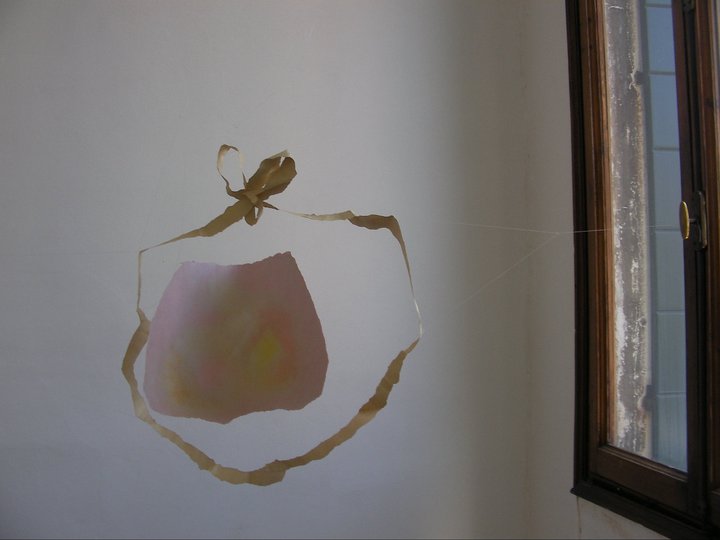
1. This year an exhibition entitled Constellations opened at Cornerhouse in Manchester UK, which I co-curated with my friend and collaborator, Karen Gaskill. The show featured works by Kitty Kraus, Katie Paterson, Takahiro Iwasaki, and Felix Gonzalez-Torres, and investigated themes of impermanence and flux. I know I’m biased, but I’m very proud of how beautiful and coherent the show was. Karen and I are already scheming about the next project!

Out of Disorder (hair) by Takahiro Iwasaki. Photo by We Are Tape.


Untitled by Kitty Kraus. Photo by We Are Tape.

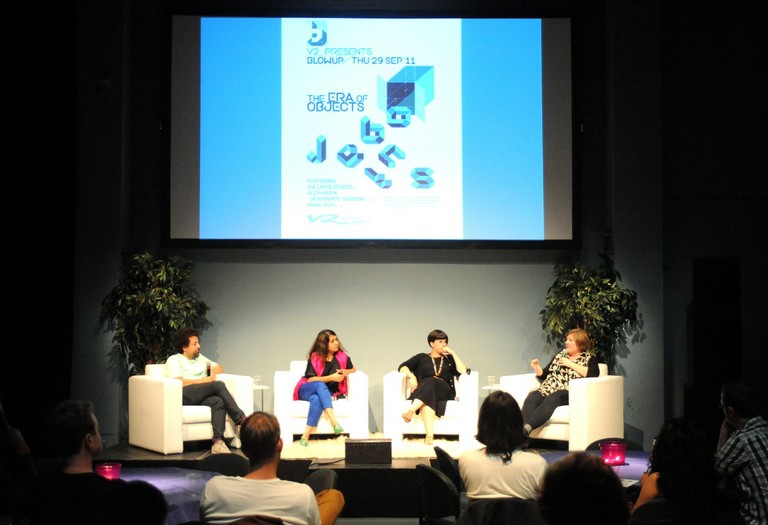
2. I started my wonderful job as Curator at V2_ Institute for the Unstable Media in Rotterdam and kicked off Blowup, a brand new event and exhibition series there. Over the year I delivered 5 successful editions of Blowup and the organisation’s first e-Book series (in the form of readers that accompany each Blowup event). More exciting things to come in 2012, including the Dutch Electronic Art Festival!

Blowup: The Era of Objects, with Julian Bleecker, Alexandra Deschamps-Sonsino, Anab Jain. With me doing my best Oprah Winfrey. Photo by Jan Nass.


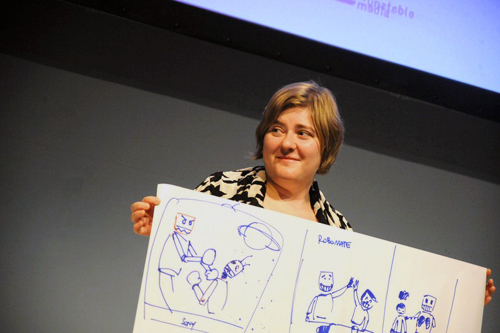
Doing my best Vanna White. Photo by Jan Nass.

3. Travel highlights: I was an invited guest of BAM in their International Curator’s Programme and had a blast discovering Flanders; gave 4 talks in 7 days on a whirlwind and magical tour through Ukraine; visited the Venice Biennale during opening week; and enjoyed the IKT (international association of curators of contemporary art) Congress in Luxembourg and Metz. I’m really looking forward to more great trips in 2012, including going to places I’ve not yet been, like Tel Aviv.

Karla Black, Scotland + Venice


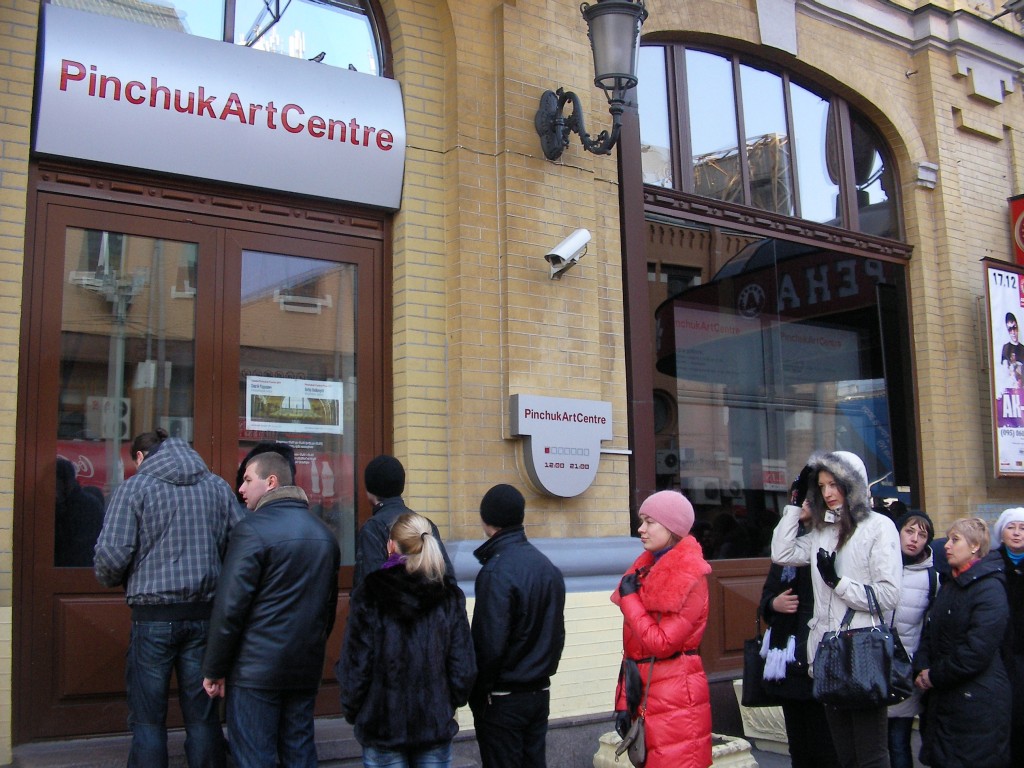
Nice to see a queue for contemporary art! Pinchuk Art Centre, Kyiv, Ukraine

4. I gave lectures in a number of places scattered around the globe, from Durham, Ontario, Canada to Lviv, Ukraine and many spots in-between (including my first Pecha Kucha here in Amsterdam to a packed house at Trouw), and I also picked up a speaking agent — Tessa Sterkenburg at The Next Speaker. Contact Tessa if you want to book me for 2012.

Dan McGee and I, in Durham, Ontario, at the Common Pulse symposium. Photo by David Jhave Johnston.


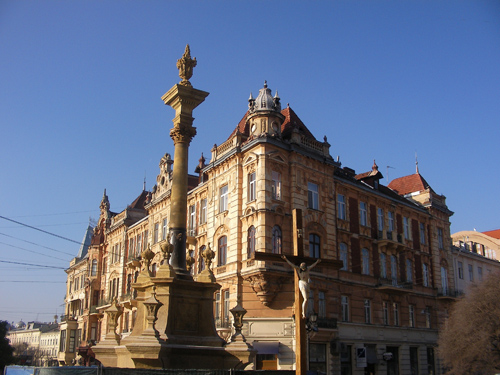
Lviv, Ukraine

5. I brought on four fabulous international correspondents to help with Curating.info, commissioned a new logo by designer Rita Godlevskis, and kicked off a huge new project: the Curating.info Fellowship, with CCA Glasgow.

New Curating.info logo by Rita Godlevskis


New site look and feel (ideas and implementation by Mikhel Proulx)


What are your top 5 highlights from this past year?
Looking forward to what 2012 has to bring!


One of my guilty time-wasting pleasures is reading online newspapers. When I really feel like procrastinating, I read the comments too.

Mostly comments on news sites are godawful. The comments section of any news site is the absolute underbelly of the internet, where every troll comes out to show their true colours. If I need a quick dose of spite, misogyny, homophobia, and general unpleasantness to remind me of how human (all too human) we are, the comments section of any given news site will serve quite nicely.

Then, in the most unlikely of places, a comment stopped me in my tracks enough to spur me to blog about it. I say in the most unlikely of places because this was an article on Canada’s national newspaper, the Globe and Mail, asking for advice on what to do about being continually invited to a neighbour’s dinner parties, where the only meal ever served is overcooked beef tenderloin and salad. Imagine — it’s a kind of First World Problem turned into a nightmare serial of mile-wide, inch-deep proportions. The comments almost universally castigated this callous couple and their ingratitude towards their kindly neighbours who perhaps prefer their beef well-done (and so what?).

Then I read the following:

shoshanab
10:55 AM on August 23, 2011
I had an uncle who lived through the holocaust in Auchwitz and Bergen Belsen as a child. As an adult, he kept strictly Kosher at home including seperate dishes and dishwashers. He also put 18 cents (the Hebrew number that correspons to the word for life) into a jar for every meal he and anyone else in his home ate, which was later donated to charity.

However, if he went to anyone else’s home, he ate whatever he was given. No requests. No special meals, no demands. If he went to your generous friend’s house he would eat anything they gave him, even pork ribs, then go home and put 18 cents into a jar to be thankful for the food and for being alive.

Perhaps you can think about that the next time well cooked beef tenderloin doesn’t meet your requirements in generously offered food and friendship.

This comment took a spurious complaint by a not-so-neighbourly couple, and in not even 200 words spun it into real lesson, especially relevant in this age of uber-foodie-ism and entitlement complexes. I might just be putting 18 cents in a jar for each meal I enjoy from now on.


Jack Layton, leader of the Official Opposition, and leader of the New Democratic Party of Canada, has lost his battle with cancer.

It is hard to put into words how significant a loss this is for Canada. Whether you voted NDP or not, Layton was universally admired for his sheer determination and devotion to Canadian families, seniors, children — everyone who needed help. He genuinely believed we could lift each other up and create a fairer society.

It has been a toxic year tainted by the disgusting spectacle of British politicians rushing to distance themselves from the corrupt media empire they had helped to create; revolutions in Egypt and elsewhere that provided hope which was quickly extinguished once it was clear youth, women, and moderate voices would have nothing to do with the new order; America brought to the economic brink by petty partisan bickering and a rabid right wing; London burning ostensibly over a police shooting but looters gone wild leaving a bitter taste; and a recent Dutch election that saw the rise of Geert Wilders’ far right PVV party go from 9 seats to 24. I have not even touched the economic roller coaster and the repulsive charade of bank bailouts followed by enormous-bonuses-as-usual on Wall Street.

Amid all this toxicity, negativity, and despair, Jack Layton had this to say from his deathbed:

“… consider that we can be a better, fairer, more equal country by working together. Don’t let them tell you it can’t be done.

My friends, love is better than anger. Hope is better than fear. Optimism is better than despair. So let us be loving, hopeful and optimistic. And we’ll change the world.”

Don’t let them tell you it can’t be done.

Don’t let them tell you it can’t be done.

Amid the shameful circus of global politics, Jack Layton was a rare genuine spirit, the epitome of public service, and someone so straightforward and real.

I am completely broken up over the loss of one of the good ones, in the face of all this bad. I am going to repeat Jack’s words many times to myself, and resolve to reprioritise and set an example afresh, to keep my head up in this dark hour. My condolences to Olivia Chow and Jack’s children, I cannot imagine the immensity of their loss.

Rest in peace, Jack.

In lieu of flowers, Jack Layton’s family has asked that donations be made to the Broadbent Institute in memoriam.


The tumbleweeds that blow through this blog… Shocking, innit?

Well instead of belaboring this point or dragging out the I’m-so-busy excuse, I will simply point out that it’s been about a year and a half that I have been settled here in the Netherlands. I love it. I delight in all the cultural discovery that there is for me here. I have fixated in particular on a child star, Danny de Munk, as one of my Dutch cultural investigations.

Danny de Munk was a child star in the 80s. He seems to have floated along, with one failed album in English, but otherwise reigning as the highest-paid Dutch singing star.

One tune from his youth, Mijn Stad (My City), stands out for me. The lyrics for this song are astounding. Here is just a small sample:

Hier heb je alles wat je hartje bekoort,
wat ruzie en inbraak, en soms ook een moord!
Je krijgt op je kanis, je fiets wordt gejat,
maar wat moest je doen, als je Mokum niet had
Want Amsterdam, is poep op de stoep,
en haat in de straat, je bent op je hoede,
vooral ‘s avonds laat,
en Dansen bij Jansen,
kapsones in zuid,
een steen door de ruit!

Which translates roughly as:
Here you have everything your heart desires,
Fights, break-ins, sometimes even murder!
Your bike is stolen, but what would you do, if you didn’t have Mokum.
Amsterdam is poop on the sidewalk, and hate in the street
You’re on your guard
Especially late at night, dancing at Jansen,
strutting in the South,
a brick through the window!

I can’t help but love this child star and the culture from which he springs where a song called “My City” is so equally disparaging and loving. Poop on the sidewalk! An honest appraisal, delivered with that eerie whistle that I find escaping from my lips more than once as I idle here in fine fine Mokum.

Do yourself a favour and watch this great video from 1985 of Danny himself singing about Amsterdam’s crime rate and poop on the sidewalk problem:

Postscript: It’s perhaps worth mentioning where I found this song in the first place. In 2004 I was at the Dutch Electronic Art Festival in Rotterdam and heard a presentation by Merijn Oudenampsen, in which, as I recall, he scathingly took down the I AMsterdam campaign. Of course in 2004 I had no idea that I’d be living in Amsterdam in 2011. All those years later, I remembered the presentation, and found that it had been adapted into an article in Mute. In the article, I noticed the Danny de Munk song lyric, typed that into YouTube, and discovered the video above.


« Older entries